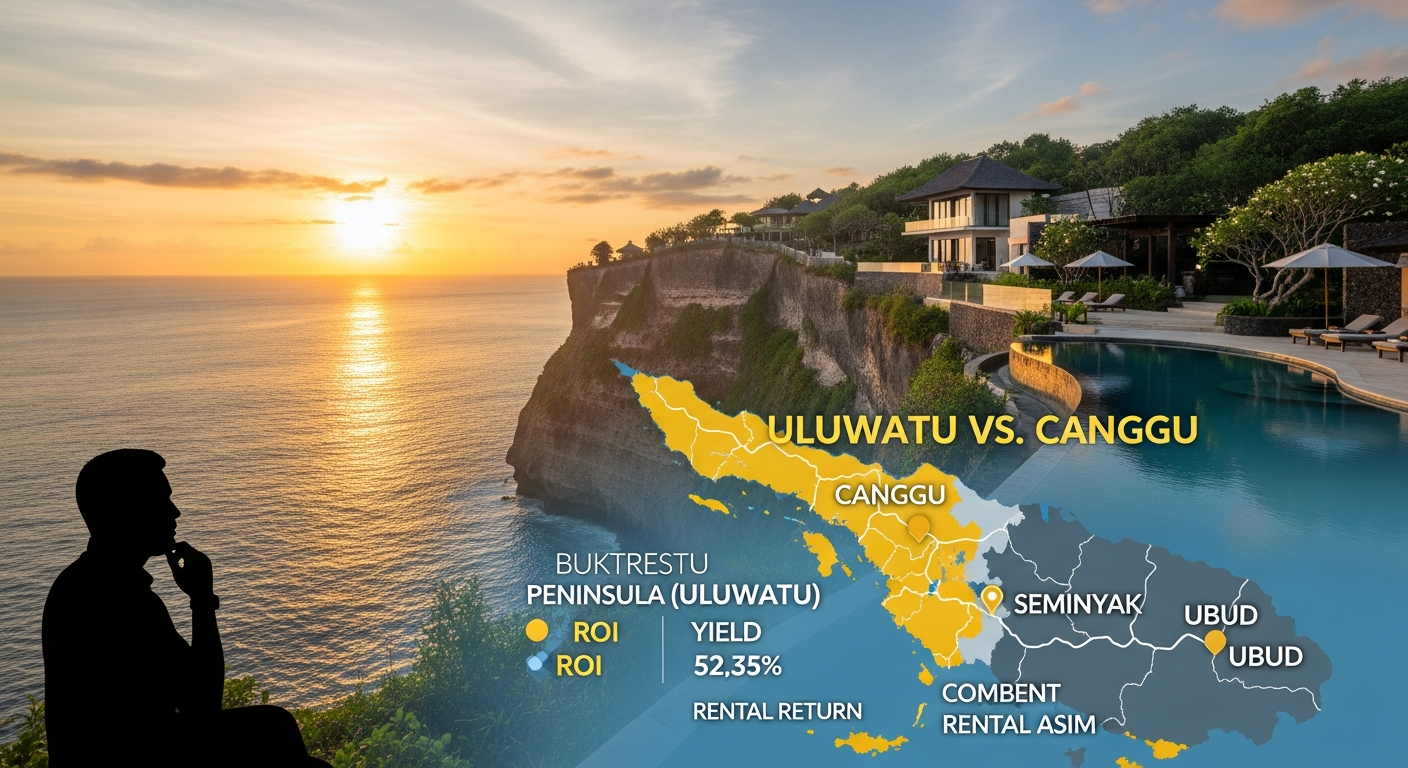
- Strategic location on the Bukit Peninsula, securing long-term value.
- Consistent demand for high-end villas driven by luxury tourism.
- Clear legal pathways for foreign ownership via leasehold and PMA structures.
The Indian Ocean horizon shimmers, a perpetual invitation. Here, on Bali’s southern tip, Uluwatu redefines luxury property investment. This is where the island’s most dramatic landscapes meet a sophisticated investor class, seeking both capital growth and a lifestyle asset.
Uluwatu’s Distinct Investment Proposition
The Bukit Peninsula, home to Uluwatu, presents a unique investment profile, sharply contrasting with Bali’s more developed northern and western coasts. This region, encompassing Pecatu, Ungasan, Padang Padang, and Bingin, maintains a controlled, high-end development trajectory. Land parcels here often command a premium, reflecting their scarcity and the inherent value of cliff-edge or surf-break proximity. For instance, prime cliff-front land in Pecatu can trade for IDR 1.5 billion per are (100 sqm), a figure that has seen an average annual increase of 12% over the past five years. This appreciation is fueled by a consistent influx of high-net-worth individuals from Australia, Singapore, and the USA, drawn to Uluwatu’s exclusive ambiance and world-class surf breaks like Padang Padang and Suluban.
Investors targeting Uluwatu property investment are acquiring more than just real estate; they are securing a stake in a global luxury destination. The area’s infrastructure development, while measured, is robust, with improved road networks connecting Ngurah Rai International Airport (DPS) to Uluwatu in approximately 35 minutes. This accessibility supports the high occupancy rates, typically averaging 70-80% for luxury villas, translating into impressive rental yields often ranging from 8-12% annually. Unlike the rapid, sometimes unregulated growth seen elsewhere, Uluwatu’s development is often tied to branded resorts such as Six Senses Uluwatu and The Bulgari Resort Bali, ensuring high standards and long-term value preservation. The focus remains on low-density, high-value projects, preserving the area’s natural beauty and exclusivity, which is a key driver for capital appreciation.
Capital Appreciation & Rental Yield: Uluwatu vs. Canggu/Seminyak
Comparing Uluwatu property investment to established hubs like Canggu or Seminyak reveals distinct market dynamics. Canggu and Seminyak experienced rapid growth from 2010 to 2020, driven by a younger demographic and a vibrant, albeit often congested, lifestyle. While these areas offered significant early capital gains, current market conditions suggest a plateau in appreciation for many segments, with land prices in prime Canggu areas stabilizing around IDR 1.2 billion per are. Rental yields in Canggu, while still healthy, face increased competition from a larger supply of villas, often leading to average yields of 6-9%.
Uluwatu, by contrast, operates in a different league. Its appeal to a more mature, affluent traveler and investor means less price volatility and a more predictable upward trend in value. The average transaction price for a luxury freehold villa in Uluwatu, exceeding USD 1.5 million, reflects the quality and exclusivity of the assets. Rental demand for these high-end properties remains strong, with peak season occupancy reaching 90% and nightly rates for a three-bedroom cliff-front villa starting from USD 800. This sustained demand, coupled with a more restricted supply of premium land, positions Uluwatu for superior long-term capital appreciation, projected at 10-15% annually over the next decade. Investors exiting the increasingly crowded markets of Sanur or Canggu are finding Uluwatu’s structured growth and higher barrier to entry a more secure environment for their capital, offering both robust yields and significant appreciation potential. Learn more about the specific benefits of investing in Uluwatu on our homepage, uluwatupropertyinvestment.com.
Lifestyle & Exclusivity: Uluwatu vs. Sanur/Ubud
The lifestyle proposition of Uluwatu property investment stands in stark contrast to the quieter, more traditional charm of Sanur or the cultural immersion offered by Ubud. Sanur, with its calm beaches and established expat community, caters to a more relaxed pace, attracting long-term residents and families. Land prices in Sanur range from IDR 700 million to IDR 1 billion per are, reflecting its mature market. Ubud, nestled among rice paddies and spiritual retreats, appeals to wellness tourism and artistic communities, with land values varying widely based on proximity to the town center and views, often around IDR 600 million per are. Both offer a distinct Bali experience, but neither matches Uluwatu’s blend of surf culture, dramatic clifftop vistas, and high-end amenities.
Uluwatu embodies a sophisticated surf-lifestyle, where world-class waves like Balangan and Bingin are minutes away, and sunsets over the Indian Ocean are a daily spectacle. The social scene revolves around exclusive beach clubs such as Savaya and Sundays Beach Club, alongside fine dining establishments and boutique retail, attracting a global jet-set. This exclusivity translates directly into property value. A villa in Padang Padang or Suluban offers not just a home but access to a specific, aspirational lifestyle. This is particularly appealing to investors seeking a personal use asset that also generates substantial income. The relative scarcity of developable land, especially on the cliff edges, ensures that this exclusivity is maintained, protecting asset values and enhancing the investor’s overall experience.
Development Potential & Infrastructure: Uluwatu’s Future
Uluwatu’s development trajectory is characterized by strategic, high-value projects, differentiating it from other regions. The Bukit Peninsula’s topography, with its dramatic cliffs and limited flat land, naturally restricts overdevelopment, preserving its premium status. Ongoing infrastructure improvements include the widening of Jalan Raya Uluwatu, facilitating smoother access to key areas and reducing travel times. The Badung Regency government supports controlled, sustainable growth, prioritizing luxury tourism and environmental preservation. This commitment ensures that future developments align with Uluwatu’s high-end brand identity.
Major hospitality groups continue to invest, signalling long-term confidence. Projects like the upcoming Mandapa, a Ritz-Carlton Reserve, further solidify Uluwatu’s position as a luxury destination. These developments bring not only branded residences but also world-class amenities, increasing the overall appeal and value of surrounding properties. For investors in Uluwatu property investment, this translates to sustained demand and appreciation. Land suitable for resort development, particularly in Ungasan or near the New Kuta Golf course, remains highly sought after. A 1-hectare parcel with ocean views might command USD 8 million, reflecting its potential for a five-star resort or a collection of private villas. This strategic development, coupled with the natural geographic limitations, ensures that Uluwatu avoids the pitfalls of over-saturation, offering a more secure and appreciating asset base for foreign capital. Explore available land parcels and development opportunities at uluwatupropertyinvestment.com/land-for-sale-uluwatu/.
Legal Frameworks: Freehold, Leasehold, PMA in Uluwatu
Navigating property ownership in Indonesia requires understanding the specific legal frameworks available to foreign investors. In Uluwatu, as elsewhere in Bali, direct freehold ownership (Hak Milik) is reserved for Indonesian citizens. Foreigners primarily acquire property through two main structures: leasehold (Hak Sewa or Hak Guna Bangunan – HGB) or through a Foreign Capital Investment Company (PMA – Penanaman Modal Asing). Leasehold agreements typically range from 25 to 30 years, with options for extensions of similar durations, often totaling 50-70 years. These agreements are registered with the Badan Pertanahan Nasional (BPN), ensuring legal validity and security for the investor. A 25+25 year lease for a 300 sqm villa plot in Bingin might cost USD 300,000, offering a clear path to long-term control.
For larger investments or commercial operations, establishing a PMA company is the preferred route. A PMA allows foreign entities to hold HGB titles, granting rights to construct and operate on land for up to 30 years, extendable for another 20 years, and then a further 30 years. This structure provides significant control and is essential for developing resorts, hotels, or multiple villa complexes. The process involves comprehensive due diligence, company registration, and obtaining necessary permits, often taking 3-6 months. Our team at uluwatupropertyinvestment.com specializes in guiding investors through these complexities, ensuring compliance with Indonesian Agrarian Law (UUPA No. 5 Year 1960) and securing the investment. Understanding these legal nuances is paramount for any successful Uluwatu property investment, providing clarity and security for foreign capital.
Branded Residences & Luxury Hospitality: The Uluwatu Advantage
Uluwatu’s landscape is increasingly defined by the presence of world-renowned luxury hospitality brands, a significant differentiator for investors. Establishments such as Aman Villas at Nusa Dua (a short drive from Uluwatu), The Ritz-Carlton, Bali, and Six Senses Uluwatu set a benchmark for quality and service. These properties attract a clientele accustomed to the highest standards, ensuring a robust market for luxury villa rentals and sales. The average daily rate for a premium villa within a branded resort in Uluwatu can exceed USD 1,200, reflecting the value of association with these global names.
The proliferation of branded residences further enhances the appeal of Uluwatu property investment. These developments offer investors the opportunity to own a villa or apartment managed by a five-star hotel operator, providing seamless maintenance, concierge services, and access to resort amenities. This model typically generates strong rental returns and often benefits from accelerated capital appreciation due to the brand’s reputation and marketing reach. For instance, a two-bedroom branded villa might command a sale price of USD 2 million, with management fees around 20-30% of gross rental revenue. This sector directly addresses the target audience of high-net-worth individuals seeking both a personal retreat and a hands-off, high-yielding investment. The presence of these international brands underscores Uluwatu’s status as a top-tier luxury destination, providing a stable and appreciating market for discerning investors.
Risk Mitigation & Exit Strategies
Every investment carries risk, and Uluwatu property investment is no exception, yet its specific characteristics offer unique mitigation opportunities compared to other Bali regions. The primary risks in Bali often revolve around market saturation, infrastructure strain, and regulatory changes. Uluwatu’s controlled development, geographical limitations, and focus on luxury mitigate saturation risks. The Badung Regency government’s consistent support for high-value tourism helps stabilize the regulatory environment. For example, permits for new large-scale developments undergo rigorous review, preventing unchecked growth.
Exit strategies for Uluwatu investments are robust, driven by persistent demand from a global pool of buyers. The market for luxury villas and land in Uluwatu remains active, ensuring liquidity. Investors can opt for outright sale, with typical property transaction times ranging from 6 to 12 months for high-value assets. Alternatively, a property can be sold with an existing leasehold agreement in place, transferring the remaining lease term to the new owner. For PMA structures, the company itself can be sold, streamlining the transfer of ownership and assets. Capital gains on Bali property are subject to a 10% tax for individuals, or 2.5% for PMA companies on land/building transfer. Our expertise at uluwatupropertyinvestment.com includes advising on optimal exit strategies, leveraging our network of international buyers and legal professionals to maximize returns and ensure a smooth divestment process. This strategic approach to risk and exit planning provides investors with confidence in their Uluwatu property investment.
Uluwatu stands as a beacon for sophisticated capital. The unique blend of dramatic natural beauty, world-class luxury, and strategic development positions it as Bali’s premier destination for property investment. Whether you seek robust capital appreciation, strong rental yields, or an exclusive lifestyle asset, Uluwatu delivers. Discover your next investment opportunity and connect with our expert team to navigate the market with confidence. Visit uluwatupropertyinvestment.com to explore our exclusive listings and specialist services.